

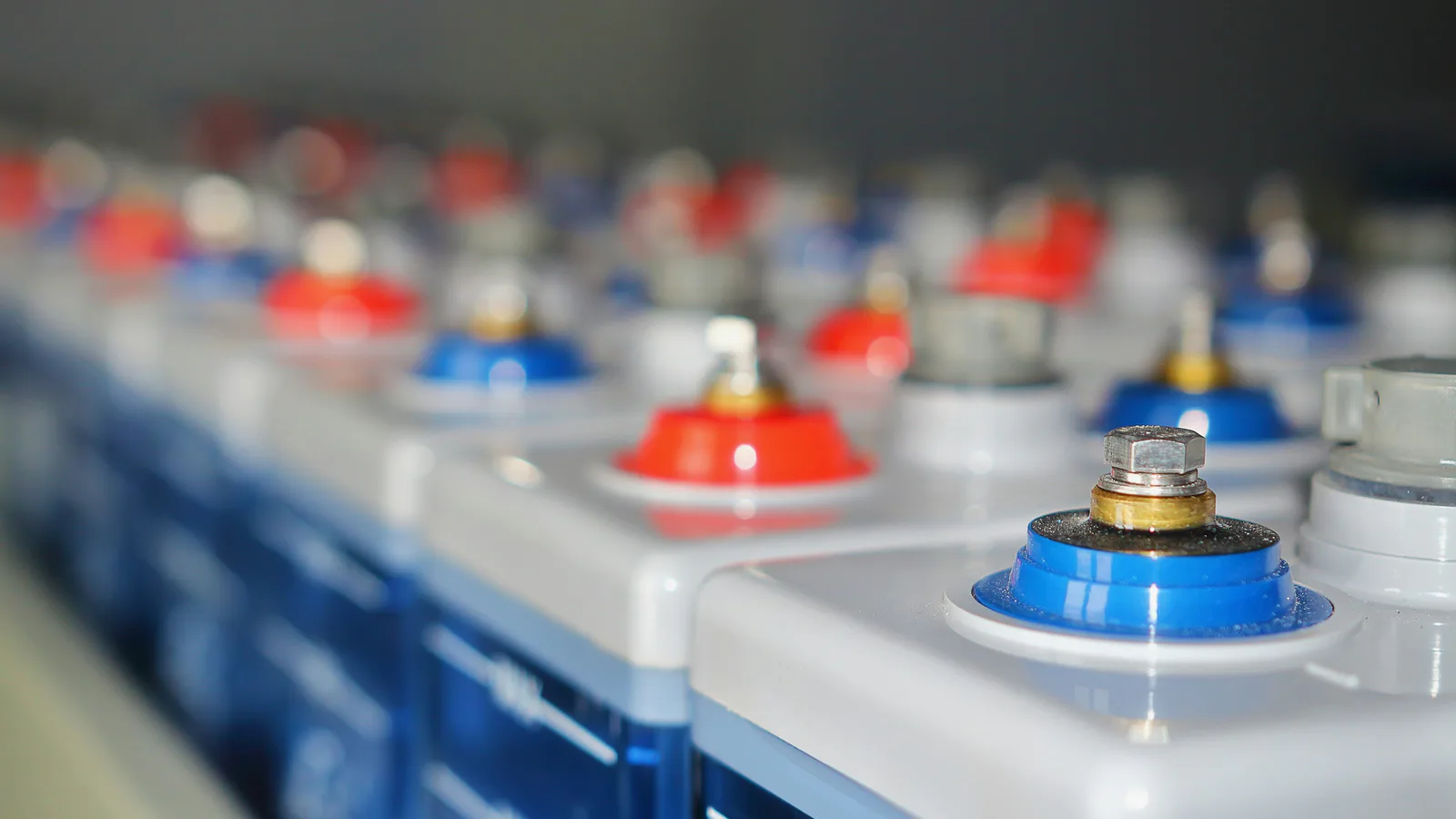
The first sodium-ion electric car arrived only in late 2023, the IEA says. In 2026 CATL and Changan unveiled a production car using sodium-ion batteries, and CATL announced a 60-gigawatt-hour storage partnership. The appeal is resilience, not raw performance: abundant materials, strong cold-weather behavior, and less exposure to lithium prices.
Most of the world's lithium now goes into batteries: the US Geological Survey estimates that they account for 88% of global lithium use. Sodium-ion batteries, which do the same job using sodium, the element in table salt, reached cars only recently. According to the International Energy Agency, the first sodium-ion electric car was introduced in China only in late 2023, and leading battery makers such as CATL and BYD are now scaling the technology up. In 2026 CATL said a production passenger car would use its sodium-ion batteries, and announced a three-year partnership covering 60 gigawatt-hours of sodium-ion supply for grid storage.
The case for sodium is not that it beats lithium on energy density. It does not. The case is that energy density is not the only thing that matters for every use. For some jobs, a somewhat heavier battery made from abundant materials, one that works in deep cold and is less exposed to lithium's price swings, may be the better trade. Where that trade holds is the question this piece examines.
What sodium gives up, and what it gets back
Sodium-ion batteries store less energy per unit of weight and volume than lithium-ion, which means less driving range, as Argonne National Laboratory put it when announcing a federal research program in 2024.
The International Energy Agency puts numbers on the gap in its Global EV Outlook 2026. The latest sodium-ion cells reach up to 175 watt-hours per kilogram, the IEA says, compared with up to 205 for the latest lithium iron phosphate (LFP) cells and 265 for nickel manganese cobalt (NMC) lithium-ion cells. The IEA says the disadvantage is even greater by volume. The IEA estimates that an average SUV with a sodium-ion battery would have a range of up to 350 kilometers, compared with 400 to 600 kilometers for lithium-ion in average weather.
Cold is where sodium does better. The IEA says sodium-ion batteries perform significantly better at low temperatures than lithium-ion, particularly LFP, with the latest generation keeping around 90% of nominal capacity at minus 40 degrees Celsius and operating at up to 70 degrees.
The materials story matters as much as the chemistry. According to the same Argonne release, sodium-ion batteries have the potential to eliminate not just lithium in some applications but also cobalt and nickel. Their usual negative electrode is hard carbon rather than graphite, the IEA notes. A 2024 peer-reviewed review in Chemical Science by Wu and colleagues describes hard carbon as the most likely commercial anode material for sodium-ion batteries because of its abundant resources, low cost, and high reversible capacity.
Why lithium keeps the idea alive
Lithium prices have swung hard. According to the US Geological Survey, the annual average price of battery-grade lithium carbonate in the United States, adjusted for inflation, was $63,700 per metric ton in 2022 and an estimated $9,000 in 2025. In the meantime, world production outside the United States rose 31% in 2025 alone, to about 290,000 tons, the USGS says.
Prices are moving again. The IEA reports that lithium prices at the start of 2026 were more than twice as high as a year earlier, though still around 70% below their 2022 peak. If those increases persist, the agency writes, they could push up lithium-ion battery prices and reinforce the momentum behind sodium-ion batteries. It adds that the effect could be tempered by existing long-term lithium supply contracts and by vertical integration among major battery makers.
Concentration is the other concern. Three countries, Australia, China, and Chile, produced about 210,000 of the roughly 290,000 tons mined outside the United States in 2025, by Magupon's sum of the USGS estimates. The IEA notes that for the largest battery makers, who can run several supply chains in parallel, sodium-ion expertise and capacity can reduce their exposure to lithium price spikes. In Magupon's reading, that is a hedge, not a replacement.
Where the trade makes sense
The IEA's assessment is specific. Because of their lower energy density, sodium-ion batteries are expected to be better suited for small-range electric cars, light commercial vehicles used in cities, two- and three-wheelers, industrial equipment such as forklifts, and stationary battery storage. The agency adds that they can also reduce cold-weather range losses when combined with lithium-ion cells in hybrid battery packs.
For energy storage, the announced numbers come from the manufacturer. In June 2026 CATL unveiled a sodium-ion energy storage system in Munich. In that June announcement, it said it would begin delivering its first sodium-ion storage systems to customers in China in September 2026, that cumulative shipments were expected to reach 1 gigawatt-hour by the end of the year, and that international deliveries would start in June 2027. CATL says it signed its 60-gigawatt-hour, three-year partnership with HyperStrong in April 2026 and describes HyperStrong as its first strategic partner for sodium-ion storage.
Cars are a more selective fit. In April 2025, CATL introduced its Naxtra sodium-ion battery, rating the passenger-car version at 175 watt-hours per kilogram, the same top figure the IEA gives for the latest sodium-ion cells, and claiming more than 10,000 charge cycles and 90% usable power at minus 40 degrees. In February 2026, CATL and the carmaker Changan unveiled a passenger car equipped with sodium-ion batteries supplied by CATL, saying at the time that it was set to reach the market by mid-2026. CATL said the battery enables a pure-electric range above 400 kilometers and delivers nearly three times the discharge power of an equivalent LFP battery at minus 30 degrees. The cycle-life, range, and cold-power figures are CATL's own.
Where it does not, yet
The IEA says sodium-ion's lower energy density limits its competitiveness with LFP batteries at current lithium prices. That sentence carries a condition: the comparison depends on what lithium costs. In Magupon's reading, if lithium becomes cheap again, much of sodium's cost argument weakens.
Scale is the other obstacle. The IEA estimates that current sodium-ion cell manufacturing capacity is just over 1% of lithium-ion capacity, and announced projects for 2030 amount to only about 7% of committed lithium-ion capacity for that year. Supply chains are far less developed. The hard carbon used for sodium-ion anodes, the agency notes, has a poorly developed supply chain that is largely concentrated in China. Argonne and CATL both present sodium-ion as a way to diversify battery supply chains, so a concentrated hard carbon supply is a problem of its own, at least for now.
Argonne and CATL both present sodium-ion as a way to diversify battery supply chains, so a concentrated hard carbon supply is a problem of its own, at least for now.
Public research is trying to close the performance gap. In November 2024, the US Department of Energy awarded $50 million over five years to a consortium led by Argonne National Laboratory, called Low-cost Earth-abundant Na-ion Storage, or LENS, with six national laboratories, Argonne included, and eight universities. "The challenge ahead is improving sodium-ion energy density so that it first matches and then exceeds that of phosphate-based lithium-ion batteries while minimizing and eliminating the use of all critical elements," said Venkat Srinivasan, the consortium's director, in Argonne's announcement.
What to watch
Three signals will show whether sodium-ion becomes a mainstream second chemistry or stays a niche.
The first is deliveries, not announcements. Supply agreements and memoranda describe intent; shipped gigawatt-hours and grid projects in operation are the test. CATL's own targets, 1 gigawatt-hour of storage shipments by the end of 2026 and international deliveries from June 2027, give dated checkpoints.
The second is the lithium price. The IEA explicitly ties sodium-ion's competitiveness to it, so in Magupon's reading a sustained rise strengthens the case and a renewed slump weakens it.
The third is energy density. The IEA's figures put sodium-ion cells at up to 175 watt-hours per kilogram against up to 205 for LFP. Narrowing that gap, the stated goal of programs such as LENS, would widen the set of vehicles where sodium-ion can compete.
None of this signals the end of lithium. EV battery deployment reached 1.2 terawatt-hours in 2025, according to the IEA, and LFP alone made up more than 55% of it. In Magupon's reading, the picture that emerges, and what CATL itself calls a dual-chemistry ecosystem, is a split market: lithium where every kilogram and liter counts, sodium where cold tolerance and lower exposure to lithium prices count more.
Sources
- Global EV Outlook 2026: Electric vehicle batteriesInternational Energy Agency, May 20, 2026 · Primary source
- Mineral Commodity Summaries 2026: Lithium (February 2026)U.S. Geological Survey · Dataset
- Naxtra Battery Breakthrough & Dual-Power Architecture: CATL Pioneers the Multi-Power EraCATL, April 21, 2025 · Primary source
- CATL and CHANGAN Launch World's First Mass-Production Sodium-Ion Passenger VehicleCATL, February 5, 2026 · Primary source
- CATL and HyperStrong Sign the World's Largest Sodium-Ion Energy Storage Cooperation AgreementCATL, May 6, 2026 · Primary source
- CATL Debuts World's First Field-Validated Sodium-Ion BESS, Bringing Sodium Storage to Commercial RealityCATL, June 22, 2026 · Primary source
- Hard carbon for sodium-ion batteries: progress, strategies and future perspective (Chemical Science 15, 6244–6268, 2024)Royal Society of Chemistry (Wu et al.), March 20, 2024 · Secondary source
- A New Era for Batteries: Argonne Leads $50M Sodium-Ion Innovation PushBrookhaven National Laboratory (reissue of Argonne National Laboratory release of November 21, 2024), November 25, 2024 · Primary source
- Rows of batteries with red and blue terminals (photo page)Unsplash (Vanya Smythe) · Secondary source
Corrections and updates
No corrections have been made to this article. How we handle corrections
Sources last checked .