

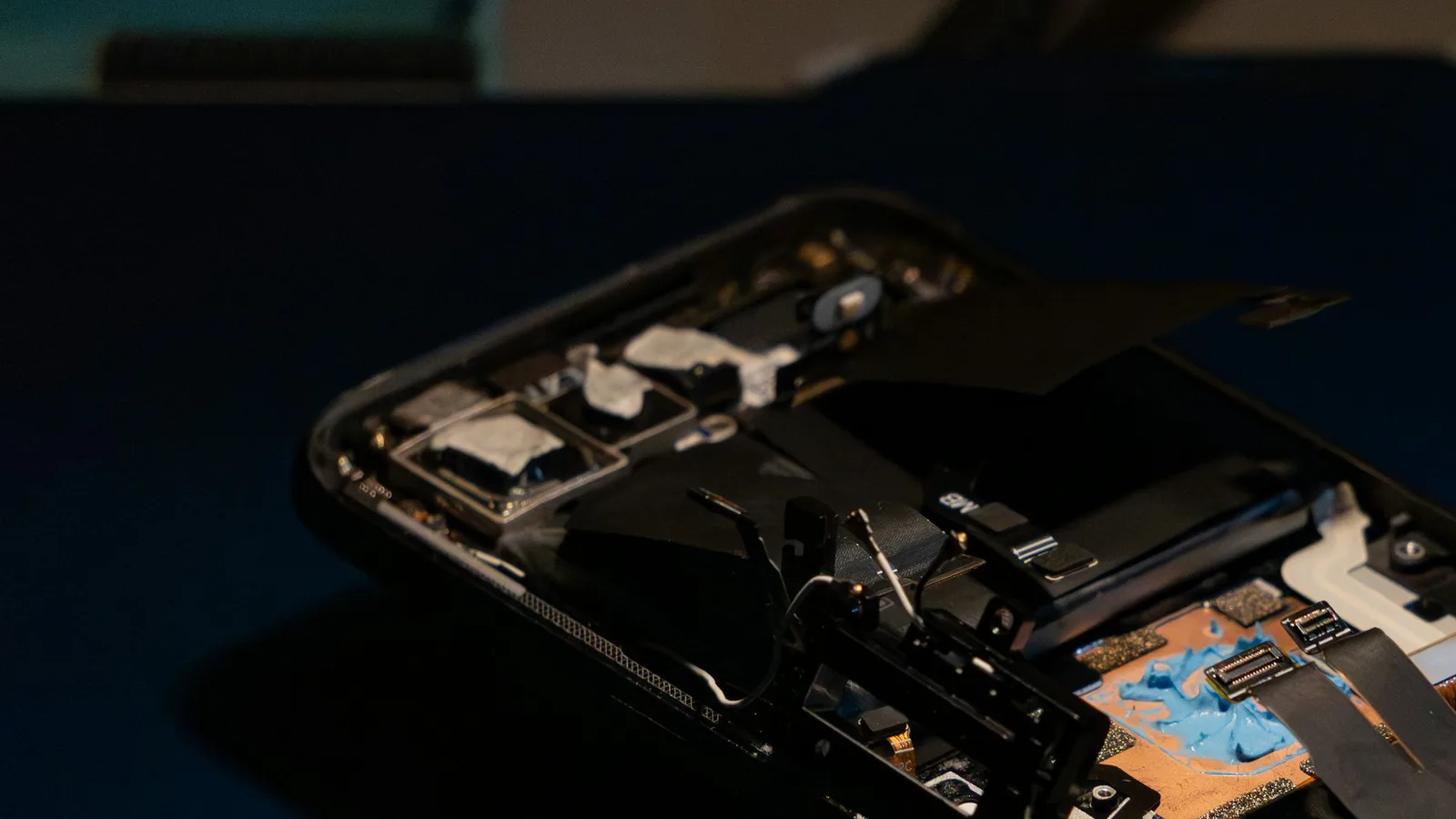
Since July 31, 2026, EU countries must apply a law that makes manufacturers repair certain products on request, and at least seven US states have enacted laws requiring parts, tools, and manuals for independent repair. Read as written, these laws mainly guarantee access, for listed products or set periods. None caps the total cost of a repair.
For years, "right to repair" was a slogan. It is now a set of statutes with dates, product lists, and enforcement clauses. Since July 31, 2026, every European Union member state has been required to apply a law that obliges manufacturers of certain goods to repair them on request. In the United States, at least seven states, including New York, California, Minnesota, Colorado, Washington, Texas, and Kansas, have enacted laws that require manufacturers to make parts, tools, and repair manuals available to owners and independent shops.
That is a real shift. It is also narrower than the slogan suggests. What most of these laws do, read as written, is guarantee access: to spare parts, to documentation, and to the software tools that make a replacement part work. What most of them do not do is cap the cost of a repair or cover every product you own.
Why repair became a legal question
In a May 2021 report to Congress titled Nixing the Fix, the US Federal Trade Commission grouped the repair restrictions raised in its workshop and public comments into eight categories, including product designs that complicate repair, unavailable parts and repair information, software locks and firmware updates, and end-user license agreements.
The FTC also weighed the reasons manufacturers gave for those limits, among them protecting intellectual property and preventing injuries from improper repairs. The agency found "scant evidence to support manufacturers' justifications for repair restrictions." The laws described below cover the same pressure points: parts, information, and software.
Europe: a duty to repair, for listed products
The center of the European approach is Directive (EU) 2024/1799 on common rules promoting the repair of goods, adopted on June 13, 2024, and published in the Official Journal on July 10, 2024. Member states had to bring national laws into force by July 31, 2026, and apply them from that date, according to the directive's transposition article.
What manufacturers must do
Under Article 5, a manufacturer must repair a product when the consumer asks, free of charge or for a reasonable price, and within a reasonable period. The obligation covers defects that occur or become apparent outside the seller's legal liability. If the manufacturer is based outside the EU, the duty passes to its authorized representative, then to the importer, then to the distributor.
The same article bars manufacturers from using contractual clauses, hardware, or software techniques that impede repair, unless justified by legitimate and objective factors, including intellectual property protection. It specifically says manufacturers may not block independent repairers from using original, second-hand, compatible, or 3D-printed spare parts that meet legal requirements.
The catch: the list
The duty to repair does not cover all consumer goods. It applies only to products for which separate EU laws already set repairability requirements, listed in Annex II of the directive. As published, that annex had 10 points: household washing machines and washer-dryers, household dishwashers, refrigerating appliances, electronic displays, welding equipment, vacuum cleaners, servers and data storage products, mobile phones, cordless phones and slate tablets, household tumble dryers, and goods with light means of transport batteries. Delegated Directive (EU) 2026/74 of January 12, 2026, added domestic local space heaters, with member states applying the change from July 31, 2026. Laptops, game consoles, and many small appliances are not on the list.
The directive also changes the legal guarantee. When a consumer chooses repair rather than replacement for a faulty product still under the seller's guarantee, the guarantee period is extended once by 12 months. That change does not apply to sales contracts concluded before July 31, 2026. Separately, the Commission must develop the common online interface for a European repair platform by July 31, 2027; it says the platform is foreseen to become operational in January 2028.
Phones and tablets got the most detailed rules
For smartphones and tablets, the more concrete obligations come from two 2023 measures that have applied since June 20, 2025: Commission Regulation (EU) 2023/1670 on ecodesign requirements, and Delegated Regulation (EU) 2023/1669 on energy labeling.
The ecodesign regulation requires manufacturers to supply professional repairers with a defined list of spare parts, including batteries, cameras, charging ports, buttons, microphones, and speakers, until at least 7 years after a model stops being placed on the market. Some parts, including the display assembly and the battery, must also be available to ordinary users, although a manufacturer may limit the battery to professionals if it meets stricter durability tests and the device is rated IP67 for a phone or IP42 for a tablet. Parts must be delivered within 5 working days during the first 5 years of the availability period, and within 10 working days after that, under the wording set by a December 2025 correcting regulation.
Software is covered too. If a manufacturer provides security, corrective, or functionality updates to a phone's operating system, it must make them available for free for at least 5 years after the model leaves the market. Where a replacement part is serialized, meaning digitally paired to the device, the manufacturer must give repairers access to the software tools needed to make it fully work, within 3 working days of a request. Batteries must still hold 80% of their capacity after at least 800 charge cycles.
The labeling regulation adds a repairability class from A to E to the energy label for phones and tablets, so the score is visible at the point of sale.
The United States: mostly access, not repair
The state laws described here do not oblige the manufacturer to fix anything. They oblige it to hand over what an owner or an independent shop needs to do the fixing.
They oblige it to hand over what an owner or an independent shop needs to do the fixing.
New York
New York's law, section 399-nn of the General Business Law, requires a manufacturer to make documentation, parts, and tools available to independent repair providers and owners on fair and reasonable terms. It covers digital electronic equipment first sold or used in New York on or after July 1, 2023. Documentation must be free, apart from printing and shipping costs for paper copies.
The exclusions are wide. The statute does not apply to motor vehicles, medical devices, off-road equipment such as farm and construction machinery, commercial electrical equipment, or electric bicycles.
California
California's Right to Repair Act, enacted through Senate Bill 244 and chaptered in October 2023, became operative on July 1, 2024. It covers only products with a wholesale price of at least $50. From $50 to $99.99, manufacturers must make documentation, functional parts, and tools available for at least 3 years after the last date the model was manufactured; at $100 or more, for at least 7 years. The law covers products first manufactured, and first sold or used in California, on or after July 1, 2021. Its exclusions include video game consoles and alarm systems. Cities, counties, and the state can seek civil penalties when a manufacturer knowingly violated the law or reasonably should have known it did, from $1,000 a day for a first violation to $5,000 a day for a third and later violations.
Minnesota
Minnesota's Digital Fair Repair law, section 325E.72 of the state's statutes, took effect on July 1, 2024, and applies to equipment sold on or after July 1, 2021. It requires parts, tools, and documentation, including updates to embedded software, on fair and reasonable terms within 60 days of a product's first sale in the state. Its exclusions include motor vehicles, medical devices, farm and other off-road equipment, and video game consoles.
Colorado, Washington, Texas, and Kansas
Colorado and Washington go further on software. Colorado's House Bill 24-1121, effective January 1, 2026, and Washington's 2025 law, whose duties apply from the same date, both cover equipment first sold or used in the state on or after July 1, 2021. For equipment first sold after January 1, 2026, both bar manufacturers from using parts pairing, software that identifies parts by a unique identifier, to block a working replacement part, reduce performance, or show misleading warnings about unidentified parts that the owner cannot dismiss. Texas and Kansas are narrower in timing. Texas's House Bill 2963 took effect September 1, 2026, and applies only to equipment first offered for sale in the state on or after that date; only the attorney general can enforce it. Kansas's law, approved April 9, 2026, applies only to equipment originally made available for sale there on or after July 1, 2027.
What a buyer can actually expect
The laws describe two models. The EU model promises a repair, at a reasonable price, for a limited list of product types. The US model promises the ingredients of a repair for a broad category of electronics, minus long lists of exclusions, and leaves the work to the owner or an independent shop.
Neither model caps the total repair bill. The EU directive requires reasonable prices for repairs and for spare parts, which must not deter repair, and it asks manufacturers to publish indicative repair prices online. The New York, California, and Minnesota laws require parts and tools on fair and reasonable terms. None of these laws guarantees that repair will cost less than replacement.
What we don't know yet
Three open questions are worth watching. The first is how each member state's national law implementing the EU directive treats "reasonable price" and "reasonable period," terms the directive leaves undefined. The second is how quickly new products join Annex II; the Commission is required to update the list within 12 months of a new repairability law being published. The third is how the US exclusions, which cover appliances and electric bicycles in New York, hold up as products add software.
The Commission must report on how the directive is working by July 31, 2031. Until then, a first step for a buyer is to check whether a product falls on the EU list or within a state law's scope before assuming a right to have it fixed.
Sources
- Directive (EU) 2024/1799 of the European Parliament and of the Council of 13 June 2024 on common rules promoting the repair of goods and amending Regulation (EU) 2017/2394 and Directives (EU) 2019/771 and (EU) 2020/1828Official Journal of the European Union, July 10, 2024 · Primary source
- Directive on repair of goodsEuropean Commission · Primary source
- Commission Regulation (EU) 2023/1670 of 16 June 2023 laying down ecodesign requirements for smartphones, mobile phones other than smartphones, cordless phones and slate tabletsOfficial Journal of the European Union, August 31, 2023 · Primary source
- Commission Delegated Regulation (EU) 2023/1669 of 16 June 2023 supplementing Regulation (EU) 2017/1369 with regard to the energy labelling of smartphones and slate tabletsOfficial Journal of the European Union, August 31, 2023 · Primary source
- New York General Business Law § 399-nn: Sale of digital electronic equipment; diagnostic and repair informationNew York State Senate · Primary source
- SB-244 Right to Repair Act (Chapter 704, Statutes of 2023)California Legislative Information, October 10, 2023 · Primary source
- Minnesota Statutes § 325E.72, Digital Fair RepairMinnesota Office of the Revisor of Statutes · Primary source
- Minnesota Session Laws 2023, Chapter 57Minnesota Office of the Revisor of Statutes, May 24, 2023 · Primary source
- Nixing the Fix: An FTC Report to Congress on Repair RestrictionsUS Federal Trade Commission · Primary source
- Commission Regulation (EU) 2025/2006 of 18 December 2025 correcting and amending Regulation (EU) 2023/1670 laying down ecodesign requirements for smartphones, mobile phones other than smartphones, cordless phones and slate tabletsOfficial Journal of the European Union, December 23, 2025 · Primary source
- House Bill 24-1121, Consumer Right to Repair Digital Electronic Equipment (signed act)Colorado General Assembly, May 28, 2024 · Primary source
- Engrossed Substitute House Bill 1483, Chapter 353, Laws of 2025: Digital electronics servicing and right to repair (session law)Washington State Legislature, May 19, 2025 · Primary source
- H.B. No. 2963, 89th Legislature, relating to diagnosis, maintenance, and repair of certain digital electronic equipment (enrolled version)Texas Legislature, June 20, 2025 · Primary source
- 2026 Session Laws of Kansas, Chapter 99 (House Bill No. 2700): Kansas digital right-to-repair actKansas Secretary of State, April 9, 2026 · Primary source
Corrections and updates
No corrections have been made to this article. How we handle corrections
Sources last checked .