

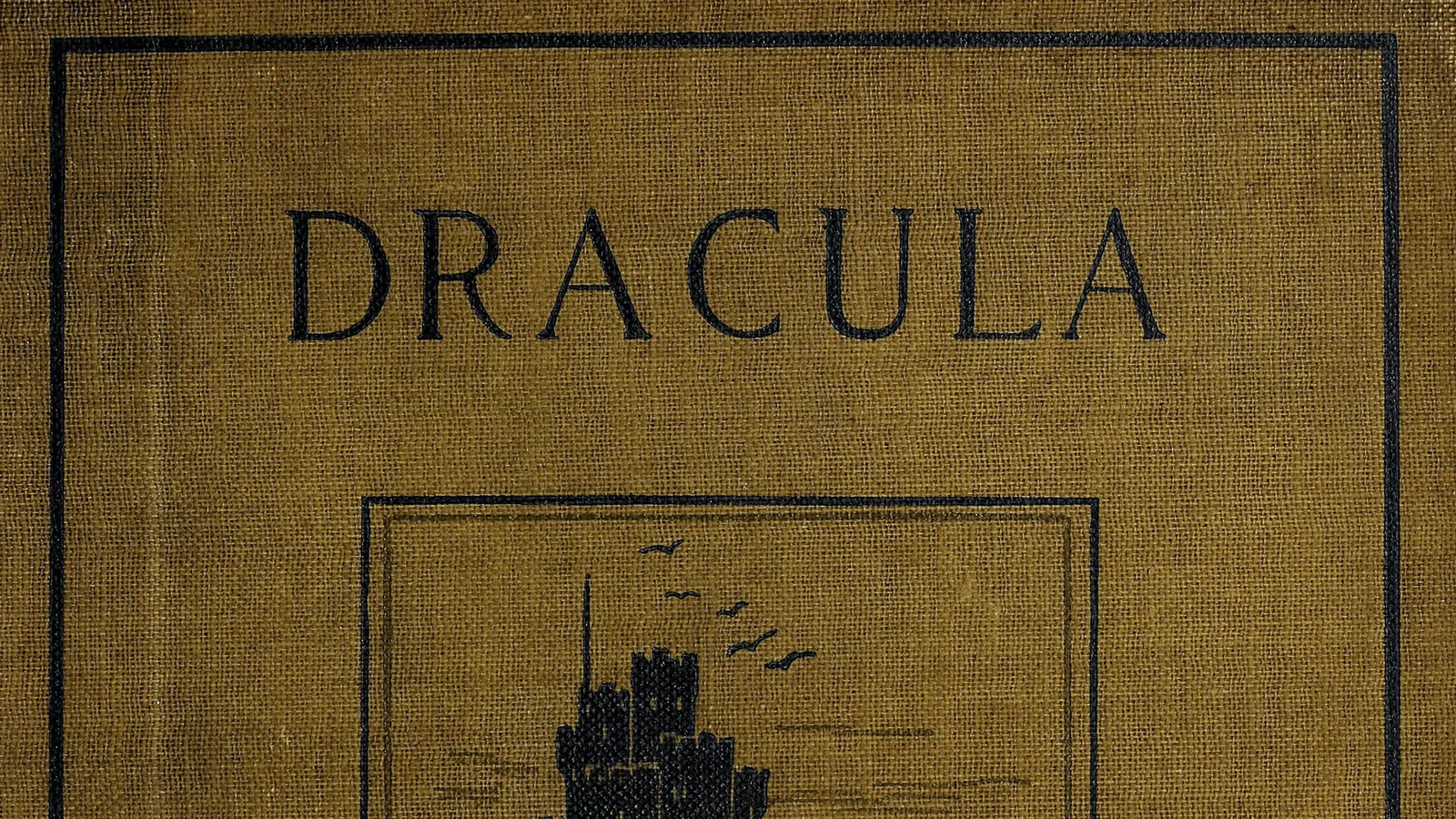
Bram Stoker's vampire novel has been free to reuse in the United States for a long time. The copyright in Universal's 1931 film has not expired. That changes on New Year's Day, with limits that matter for anyone who wants to reuse it.
The Copyright Office's own catalog gives the date in a single entry: Dracula, presented by Carl Laemmle, directed by Tod Browning, copyright Universal Pictures Corp., February 2, 1931. At the end of 2026, the longest protection the law allows for that film runs out. On January 1, 2027, the copyright in Universal's film enters the public domain in the United States, along with the copyrights in other works first secured in 1931.
So who gets Dracula? In the United States, from New Year's Day, the film's own copyright no longer stands in anyone's way. Stoker's novel was already free. Two things are not settled by the calendar: the stage play the film also drew on, and anything added in later versions. The answer also differs in other countries.
How the 95-year clock works
Works from 1931 were protected under the Copyright Act of 1909. According to the US Copyright Office's Circular 15A, copyright under that law was secured on the date a work was published or, for an unpublished work, on the date it was registered. It lasted for a first term of 28 years and could be renewed for a second term. Later amendments stretched the renewal term, first to 47 years and then, through the 1998 Copyright Term Extension Act, to 67 years. The result is a maximum of 95 years.
The statute says the same thing in legal language. Section 304(b) of the Copyright Act gives a work that was still in its renewal term when the 1998 extension took effect a term of 95 years from the date copyright was originally secured. Section 305 sets the end point: every term runs to the end of the calendar year in which it would otherwise expire.
Put the two together and the arithmetic is simple. A work whose copyright was first secured at any point in 1931 is protected, at most, through December 31, 2026. That is why Public Domain Day falls on New Year's Day, and why Circular 15A, revised in April 2026, can state flatly that all works published in the United States before January 1, 1931, are in the public domain. Next year's cutoff moves forward by one year.
Some works of the era fell out of copyright much earlier. Cornell University Library's copyright-term chart lists three rows for works first published in the United States in 1931. Published without a copyright notice: public domain for failure to comply with required formalities. Published with notice but never renewed: public domain because the copyright expired. Published with notice and renewed: 95 years after publication. Duke Law School's Center for the Study of the Public Domain adds the same two formalities: to be eligible for the full 95-year term, a work had to be published with a copyright notice and, for works from before 1964, renewed after the first 28-year term. Circular 15A says a copyright was eligible for renewal during the final, 28th year of that first term.
The 1931 class, by the record
The Duke center publishes a Public Domain Day list of notable works entering the US public domain, and its 2026 edition is cited throughout this article. Its 2027 page was not yet online when this article was last reviewed, so Magupon checked specific films against the Copyright Office's published registration records instead, in the cumulative Motion Pictures 1912–1939 catalog the Office issued in 1951.
The records place several well-known films of the early sound era squarely in 1931. The catalog lists Universal Pictures Corp. as copyright claimant for Dracula, dated February 2, 1931. Charles Chaplin's City Lights carries a February 1, 1931, date, with Chaplin himself as claimant. Warner Bros.' The Public Enemy is dated April 4, 1931. Paramount's Monkey Business is dated September 17, 1931. Universal's Frankenstein, directed by James Whale, is dated November 16, 1931.
All five were renewed, which is what carries them to the full 95 years. The Copyright Office's renewal catalogs record Dracula (renewal R227698), City Lights (R217556), The Public Enemy (R215569), and Monkey Business (R227023) in 1958, and Frankenstein (R243591) in 1959, each in the 28th year after its original copyright date.
Music offers a reminder that release dates and copyright dates are not the same thing. In its 2026 roundup, Duke explained that the song Mood Indigo came out in 1930, but its sheet music was not published until 1931. Under the law of the time, the copyright clock for a song started with sheet-music publication, so Mood Indigo joins the 2027 class rather than the 2026 one.
Sound recordings run on a separate track. Duke notes that under the 2018 Music Modernization Act, recordings first published from 1923 through 1946 enter the public domain on a 100-year schedule, so a recording first published in 1931 on its own stays protected until January 1, 2032. Sounds that accompany a film are different: Duke says they, and music that first appeared in a film, generally share the film's term.
The traps: earlier dates, underlying works, and later versions
The first trap is assuming the release year settles it. The same 1951 catalog records a December 29, 1930, copyright date for Little Caesar and a December 31, 1930, date for Cimarron. Duke's 2026 list included Cimarron, though it was released in 1931, for exactly that reason: when publication and registration dates differ, the earlier date controls, a rule Duke describes as resolving discrepancies in favor of the public. By the catalog's dates, both films were already free on January 1, 2026.
The second trap is the material a film was built on. The catalog lists two sources for Dracula: the novel by Bram Stoker and the play by Hamilton Deane and John Balderston. It lists Frankenstein as adapted from the play by Peggy Webling, which was based on the novel by Mary Shelley. A play is a separate work with its own copyright history. Duke's guide gives the warning in another context: a film and its underlying material can have different terms, as with It's a Wonderful Life, whose film copyright lapsed while its soundtrack and the short story it was based on stayed protected. Magupon did not find a public record settling the current status of either play, so this article makes no claim about them. What the 95-year rule settles is the copyright in the films themselves.
The third trap is later versions. Only what was in the 1931 work becomes free. Duke made the point about the 1930 films in its 2026 list: later versions may contain newly added material that is still copyrighted. The same guide adds that a restoration which faithfully reproduces an old film does not create a new copyright; only original, creative additions can. The catalog shows why that matters for Dracula. A later Universal film, Dracula's Daughter, carries a May 20, 1936, copyright date. If that copyright was renewed, its 95 years run through the end of 2031, and anything first introduced in it stays protected until then.
Characters and trademarks
The same logic applies to characters. Duke's 2026 guide lists Dracula and Frankenstein's monster among characters already in the public domain. Smithsonian Libraries' digitized copy of an 1899 American edition of Stoker's novel, published in New York by Doubleday & McClure, is marked as carrying no copyright in the United States. What changes in 2027 is the status of the 1931 films' own copyright. Traits and designs that appeared only in later films are a separate question, tied to those films' own copyrights.
The fourth trap is trademark. A studio can hold trademarks in names and images used to sell products. Duke's guide, discussing Betty Boop's 2026 arrival, is careful about the boundary. Trademarks do not override copyright law, it says, citing the Supreme Court; their reach is limited to uses likely to confuse consumers about a product's source or sponsorship. Free to adapt is not the same as free to imply an endorsement.
Outside the United States, a different calendar
Everything above is US law. Duke stresses that many countries, including those in the European Union, use a term of the author's life plus 70 years, even for older works that get 95 years in the United States. A work can be copyrighted in one country and free in another. Duke's own example from the 2026 class is W. Somerset Maugham's Cakes and Ale, public domain in the United States in 2026 but still protected elsewhere until 2036, because Maugham died in 1965.
Which country's law applies? As a general matter, Duke writes, courts have said that users are governed by the law of the jurisdiction where they use the work, though the inquiry can be more complicated and depend on the circumstances.
Foreign works add one more wrinkle inside the United States. Circular 15A explains that the Uruguay Round Agreements Act restored US copyright, as of January 1, 1996, in certain foreign works that had lost it for failing to meet American formalities, including renewal. Under Section 104A of the Copyright Act, a restored copyright lasts for the remainder of the term the work would otherwise have had in the United States, and Duke notes that for foreign works first published or copyrighted in 1930, that term is 95 years. On Magupon's reading of the same rule, a restored copyright in a foreign work first published in 1931 also runs through the end of 2026.
Why the public domain is worth the wait
Why does any of this matter now? Because from 2027, the copyright in the 1931 versions of these films has expired in the United States, so they can be screened, restored, remixed, quoted at length, or reissued, subject to trademark and any separately protected material. The Duke team's case for the public domain is practical. When copyrights expire, future authors can legally build on the past, and anyone can rescue forgotten works from obscurity and make them available again.
That second point is easy to underrate. Over nearly a century, separate copyrights in characters, audiovisual content, and music can be implicated in a single work and can change hands many times. Duke's guide notes that copyright expiration brings clarity, because a work that becomes entirely public domain is free for reuse without untangling that web of ownership.
Duke's own examples show how the cycle works: Guillermo del Toro's 2025 Frankenstein was adapted from Mary Shelley's novel, a public domain book. Nothing obliges anyone to make a good Dracula movie in 2027. What changes is that the copyright in the 1931 film stops being anyone's exclusive property.
Nothing obliges anyone to make a good Dracula movie in 2027.
What to watch before New Year's Day
When Duke's Center for the Study of the Public Domain publishes its 2027 edition, it may add books, songs, and artworks that this article has not checked. Magupon may update this article when that list is published. Until then, the careful reading is narrow: the copyright in the 1931 version of a work, in the United States, ends with December 31, 2026.
Sources
- 17 U.S.C. § 304, Duration of copyright: Subsisting copyrights (United States Code, 2024 Edition)U.S. Government Publishing Office (GovInfo) · Primary source
- 17 U.S.C. § 305, Duration of copyright: Terminal date (United States Code, 2024 Edition)U.S. Government Publishing Office (GovInfo) · Primary source
- Circular 15A: Duration of Copyright (revised April 2026)U.S. Copyright Office · Primary source
- Catalog of Copyright Entries, Cumulative Series: Motion Pictures 1912–1939U.S. Copyright Office, Library of Congress (1951; digitized by the Internet Archive) · Primary source
- Public Domain Day 2026Center for the Study of the Public Domain, Duke University School of Law, July 28, 2026 · Secondary source
- Copyright Term and the Public Domain in the United StatesCornell University Library (chart by Peter B. Hirtle), January 1, 2026 · Secondary source
- Dracula (New York: Doubleday & McClure Co., 1899), digitized recordSmithsonian Libraries and Archives · Primary source
- 17 U.S.C. § 104A, Copyright in restored works (United States Code, 2024 Edition)U.S. Government Publishing Office (GovInfo) · Primary source
- Catalog of Copyright Entries, Third Series, Vol. 12, Parts 12-13: Motion Pictures and Filmstrips, 1958 (renewal registrations)U.S. Copyright Office, Library of Congress (digitized by the Internet Archive) · Primary source
- Catalog of Copyright Entries, Third Series, Vol. 13, Parts 12-13: Motion Pictures and Filmstrips, 1959 (renewal registrations)U.S. Copyright Office, Library of Congress (digitized by the Internet Archive) · Primary source
Corrections and updates
No corrections have been made to this article. How we handle corrections
Sources last checked .