

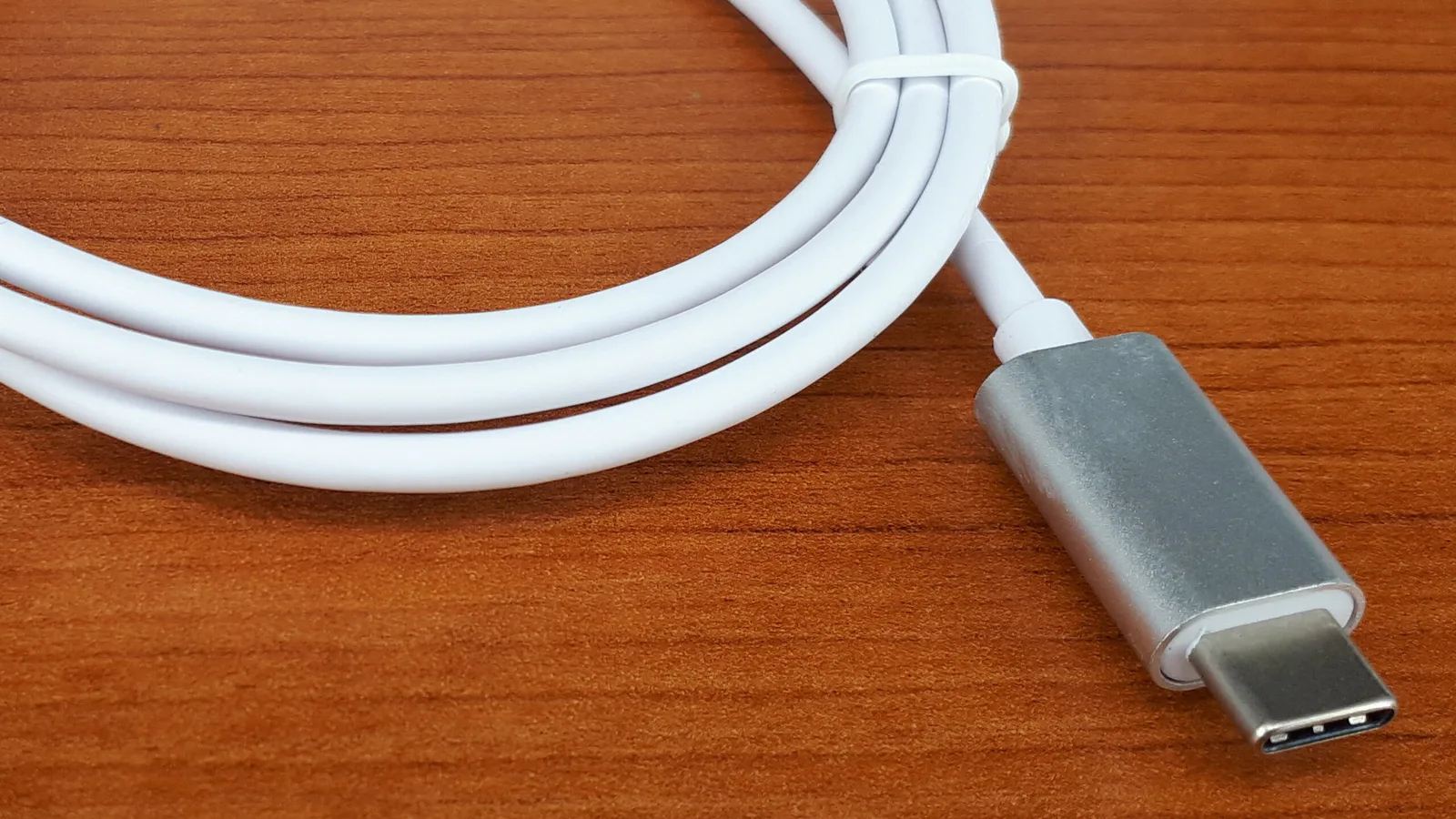
Europe's common-charger law made USB-C the standard port for a long list of devices, with laptops added on April 28, 2026. The port is the easy part. Whether a charger fills a battery quickly depends on the power the device asks for, the charger can supply, and the cable is rated to carry.
Since December 28, 2024, a new phone, tablet, or pair of earbuds sold in the European Union that charges by cable has had to use a USB-C port, and since April 28, 2026, the same has applied to laptops. The rule shrinks the drawer full of incompatible plugs. It does not end confusion about why one USB-C charger fills a battery much faster than another. The short answer to the headline: one port, but not one cable or one charger for everything.
This guide explains what the EU rule actually requires, why a shared port is not the same as shared speed, and how to read the numbers that decide charging speed: watts, USB Power Delivery, and cable ratings.
What the EU rule requires
The law is Directive (EU) 2022/2380, an amendment to the EU's Radio Equipment Directive adopted on November 23, 2022. Because it amends the radio equipment rules, it applies to devices in that legal category, and it lists 13 kinds of them: handheld mobile phones, tablets, digital cameras, headphones, headsets, handheld videogame consoles, portable speakers, e-readers, keyboards, mice, portable navigation systems, earbuds, and laptops.
Member states had to apply the rules from December 28, 2024, for the first 12 categories and from April 28, 2026, for laptops. Any of these devices that can be recharged by cable must have a USB Type-C receptacle.
The directive also standardizes fast charging. If a device can charge by cable at more than 5 volts, more than 3 amps, or more than 15 watts, it must support USB Power Delivery, and any additional charging protocol it uses must still allow USB Power Delivery to work fully, whichever charger is used. The European Commission describes the aim plainly: charging speed should be the same with any compatible charger for a given device.
Buying a device without a charger
The second big change is unbundling. Under the directive, a seller that offers one of these devices together with a charger must also offer it without one. A pictogram on the packaging tells you which version you are buying: one design shows that a charger is included, another that it is not.
The Commission says unbundling will cut electronic waste by an estimated 980 metric tons a year, and that the package of measures will save consumers at least €250 million a year on unnecessary chargers. Those are the Commission's own estimates.
Cables are not yet covered by unbundling. The Commission says it will report by December 28, 2026, on whether to extend the rule to cables, and that it launched a study on the question in 2025.
Why USB-C does not guarantee fast charging
A USB-C port tells you a cable will fit. It does not tell you how much power will flow. Three things set the speed: how much power the device can accept, how much the charger can supply, and how much the cable is rated to carry. The slowest of the three wins.
USB Power Delivery has grown over time. According to the USB Implementers Forum (USB-IF), which publishes the USB Power Delivery specification, USB PD was limited to 100 watts before Revision 3.1. That revision allows up to 240 watts over a full-featured USB-C cable, using new fixed voltages of 28, 36, and 48 volts for 140, 180, and 240 watts respectively. How much of that a given device can use is printed on its box, as the next section explains.
The EU rule acknowledges the trajectory. Its recitals note that USB-C combined with USB PD can provide up to 100 watts and that the updated specification supports up to 240 watts, which leaves room for more powerful devices to be brought under the rule later.
How to read the watts on the box
The directive makes the device's needs visible. Devices covered by the rule must state the power range a charger needs to provide, using fixed wording: the power delivered by the charger must be between a minimum number of watts required by the device and a maximum number of watts needed to achieve its maximum charging speed. Devices that use fast charging must also say "USB PD fast charging" and name any other charging protocol they support.
That sentence is the most useful number on the box. If the device says it needs a maximum of 45 watts for full speed, a 20-watt charger will still work, just more slowly, as long as it supplies at least the stated minimum. A more powerful charger will not make the device charge faster than its stated maximum; it simply has headroom to deliver the full 45. These figures are illustrative; check the range printed for your own device.
Chargers themselves are next. A separate EU ecodesign regulation for external power supplies, Regulation (EU) 2025/2052, adopted on October 13, 2025, will apply from December 14, 2028. According to the Commission, it requires most covered external power supplies to have at least one USB Type-C port, bans hard-wired USB-C cables on common chargers, requires power marking at each port and introduces an EU common charger logo that shows the maximum power a single USB-C port can deliver.
How to read a cable
Cables are easy to confuse, because two cables with the same plug can carry very different power. The USB-IF requires every USB-C to USB-C cable that goes through its compliance program to be labeled with a power capability of either 60 watts or 240 watts. Its logo guidelines give an example: a 20Gbps cable that supports 20 volts at 3 amps must carry the combined 20Gbps/60W logo.
Because certified cables come in just those two power ratings, a simple reading follows: a 60-watt cable is enough for a device whose stated maximum is 60 watts or less, while a device that asks for more needs a 240-watt cable to reach full speed. The certified logos may be used only on products that passed USB-IF compliance testing, so an unlabeled cable carries no certified rating to rely on.
Data speed is a separate rating. A cable can be rated for 240 watts and still carry data at basic USB 2.0 speeds; the USB-IF notes that its USB 2.0 power-rated cables deliver data at up to 480 megabits per second. If you need fast file transfers or a display connection, check the data rating as well as the watts.
What about wireless charging?
The EU has not mandated a wireless standard. The Commission says it considers binding rules premature because wireless charging currently shows low fragmentation and good interoperability, and on February 26, 2025, it adopted a request instructing European standards bodies to prepare a harmonized standard, to pave the way for a common wireless solution.
For wireless charging, the Wireless Power Consortium maintains the Qi standard. According to the consortium, Qi2 launched in November 2023 with 15 watts of charging power and uses magnets to align device and charger, and in July 2025 it introduced Qi2 25W, based on Qi version 2.2.1, which it says delivers nearly 70% more power than the original Qi2.
What comes next
The device list may grow. In a first report on the rule's scope, dated June 30, 2026, the Commission identified seven product categories whose inclusion it found could improve convenience and savings: smartwatches, fitness trackers, smart glasses, wristbands, AR/VR headsets, personal-use drones, and video game controllers. That is an assessment, not yet a legal requirement.
For buyers, the practical rule is simple. Read the device's minimum and maximum watts, pick a charger that supplies at least the maximum if you want full speed, and use a cable whose label covers that wattage.
Sources
- Directive (EU) 2022/2380 amending Directive 2014/53/EU on the harmonisation of the laws of the Member States relating to the making available on the market of radio equipmentOfficial Journal of the European Union (EUR-Lex), December 7, 2022 · Primary source
- The EU common chargerEuropean Commission, Directorate-General for Internal Market, Industry, Entrepreneurship and SMEs · Primary source
- EPS Regulation 2025/2052 (new)European Commission, Energy Efficient Products · Primary source
- USB Charger (USB Power Delivery)USB Implementers Forum · Primary source
- USB Type-C Cable Logo Usage GuidelinesUSB Implementers Forum · Primary source
- Cables and ConnectorsUSB Implementers Forum · Primary source
- WPC Ushers in Next Generation of Faster Wireless Charging (news release)Wireless Power Consortium, July 23, 2025 · Primary source
- Qi Wireless ChargingWireless Power Consortium · Primary source
Corrections and updates
No corrections have been made to this article. How we handle corrections
Sources last checked .